
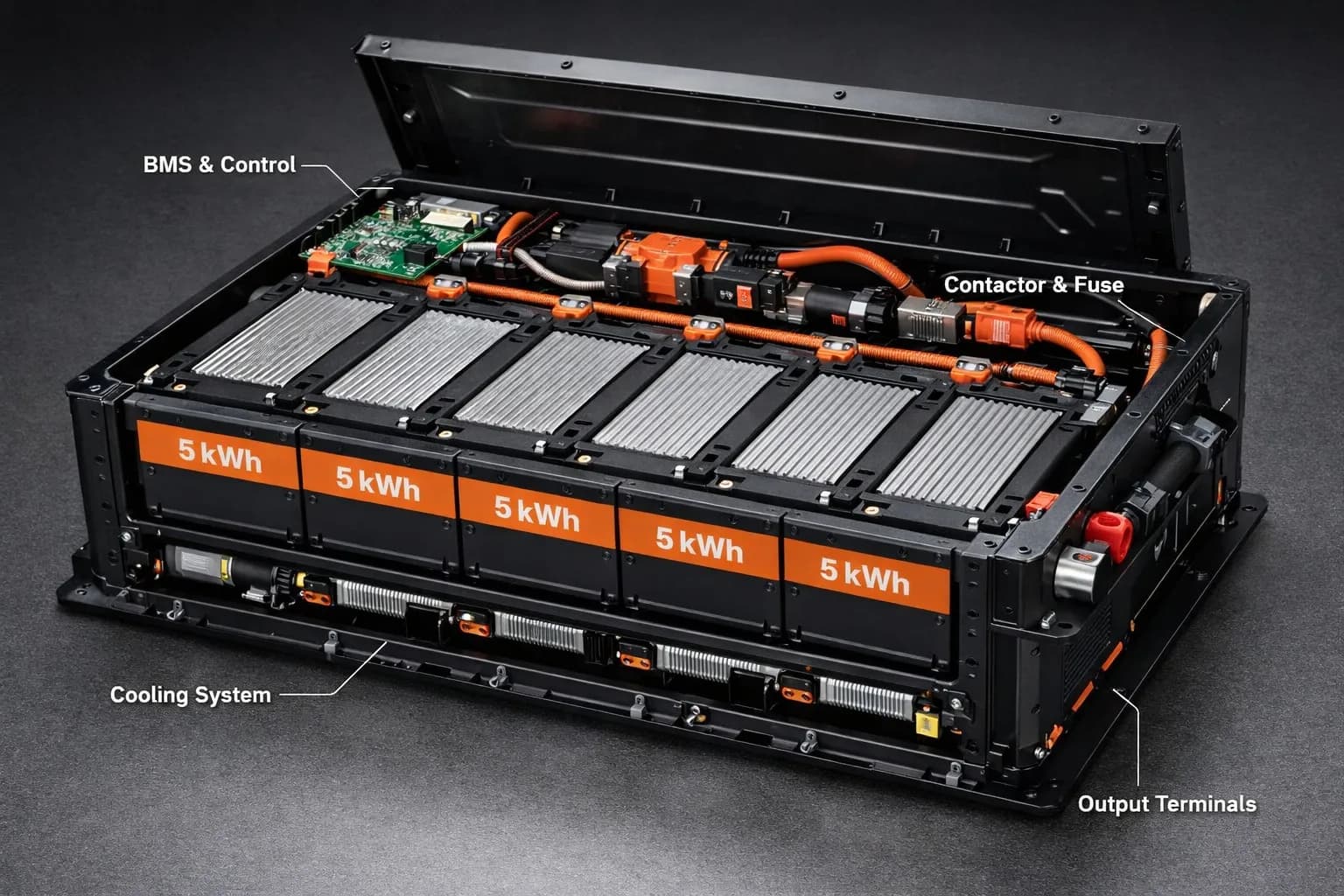
An EV pack retired at eighty percent capacity is not waste. Whether it is an asset depends on what happens next.
Electric vehicle packs are typically retired well before their cells are exhausted. What remains is a large quantity of storage capacity with degraded but entirely usable performance, attractive for stationary applications where weight and volume matter far less than they do in a vehicle.
The obstacles are practical rather than theoretical. Packs arrive in inconsistent states of health, testing them individually is expensive, and warranties are difficult to structure around uncertain remaining life.
Our research treats second-life and recycling as a single decision rather than competing paths: a pack should go to whichever route recovers more value, and that determination needs a fast, cheap and trustworthy state-of-health assessment. That assessment is the bottleneck worth solving.
